


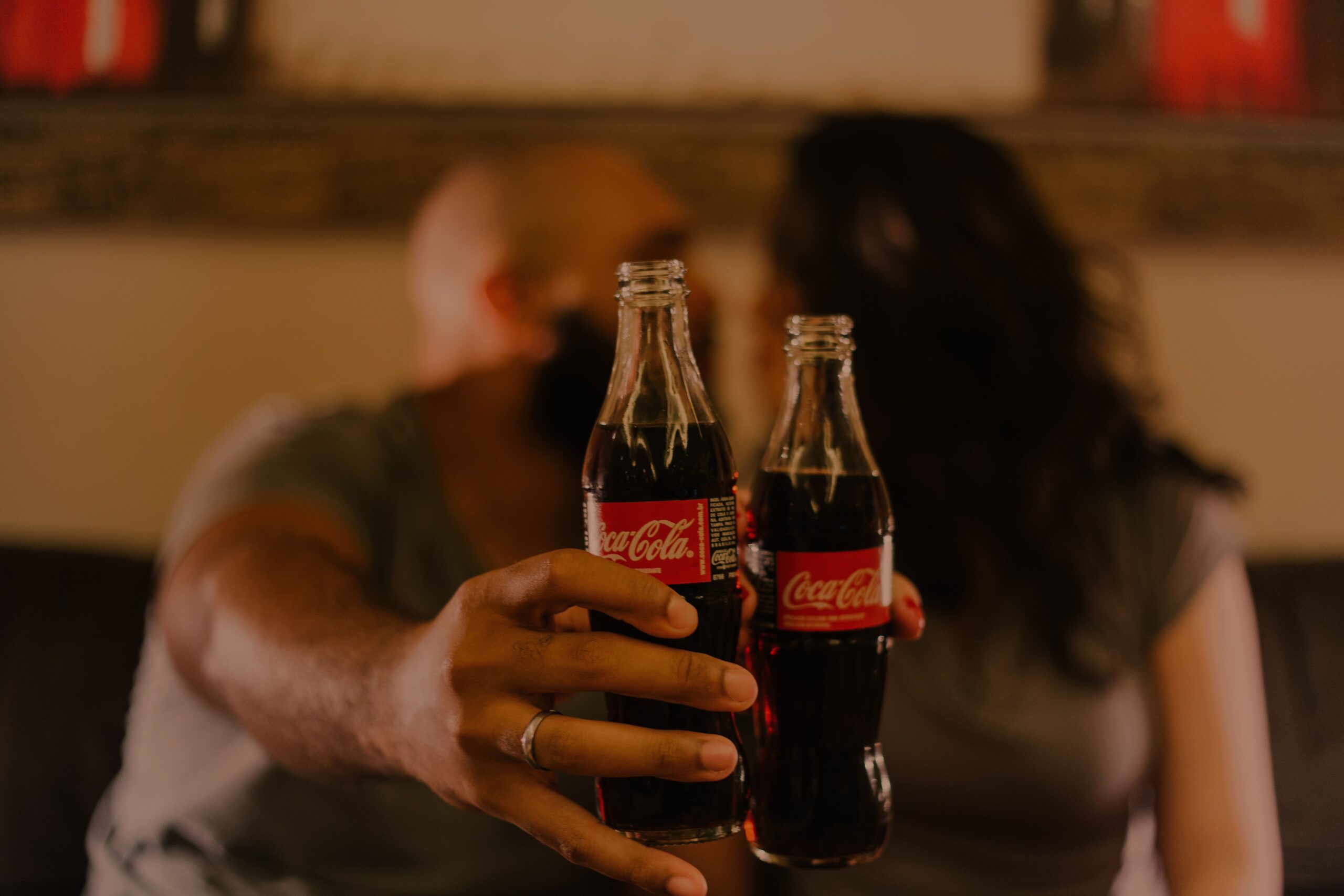
Coca Cola Slogan: Why These Famous Words Matter
The coca cola slogan has changed many times throughout the brand’s long advertising history. From simple messages about refreshment to campaigns built around happiness, togetherness, and shared experiences, Coca-Cola has repeatedly used short phrases to keep its brand connected with changing generations.
Coca-Cola was introduced in 1886, and its advertising history stretches across more than a century. During that time, the company has used dozens of slogans, including “Drink Coca-Cola,” “The Pause That Refreshes,” “It’s the Real Thing,” “Always Coca-Cola,” “Open Happiness,” “Taste the Feeling,” and “Real Magic.”
What makes Coca-Cola slogans particularly interesting is that they do more than describe a soft drink. They often connect the product with a feeling, a moment, or a social experience.
That is one reason some Coca-Cola advertising lines remain recognizable decades after they first appeared.
What Is the Current Coca Cola Slogan?
One of Coca-Cola’s most recent global brand platforms is “Real Magic.” Coca-Cola introduced the Real Magic platform in 2021, replacing the previous “Taste the Feeling” campaign.
Rather than focusing only on the taste of Coca-Cola, “Real Magic” emphasizes the idea that meaningful moments can happen when people connect with one another.
This approach represents a broader change in modern brand advertising. Instead of simply telling customers that a product tastes good, companies increasingly try to associate their products with emotions and experiences.
For Coca-Cola, that strategy fits naturally with themes that have appeared throughout its advertising history: friendship, refreshment, optimism, hospitality, celebration, and connection.
Coca-Cola Slogan Timeline
Coca-Cola has used a remarkable number of slogans over the years. Here are some of the most important ones:
| Year | Coca-Cola Slogan |
|---|---|
| 1886 | Drink Coca-Cola |
| 1904 | Delicious and Refreshing |
| 1922 | Thirst Knows No Season |
| 1929 | The Pause That Refreshes |
| 1948 | Where There’s Coke There’s Hospitality |
| 1952 | What You Want Is a Coke |
| 1963 | Things Go Better with Coke |
| 1969 | It’s the Real Thing |
| 1971 | I’d Like to Buy the World a Coke* |
| 1976 | Coke Adds Life |
| 1979 | Have a Coke and a Smile |
| 1982 | Coke Is It! |
| 1988 | You Can’t Beat the Feeling |
| 1993 | Always Coca-Cola |
| 2000 | Coca-Cola. Enjoy |
| 2001 | Life Tastes Good |
| 2006 | The Coke Side of Life |
| 2009 | Open Happiness |
| 2016 | Taste the Feeling |
| 2021 | Real Magic |
*“I’d Like to Buy the World a Coke” came from Coca-Cola’s famous 1971 Hilltop advertising campaign and was part of the broader “It’s the Real Thing” campaign.
1. “Drink Coca-Cola” — 1886
The story of the Coca Cola slogan begins with “Drink Coca-Cola.”
It is difficult to imagine a simpler advertising message. Yet simplicity was exactly what made the phrase effective.
The slogan directly told consumers what to do and prominently used the product’s name. There was no complicated message and no attempt to explain an elaborate lifestyle. The advertisement simply encouraged people to drink Coca-Cola.
The phrase also established an important principle that continued throughout Coca-Cola’s advertising history: keep the brand name closely connected to the consumer action.
2. “Delicious and Refreshing” — 1904
By 1904, Coca-Cola advertising was putting more emphasis on the experience of consuming the beverage.
“Delicious and Refreshing” highlighted two qualities customers could associate with the drink.
The slogan demonstrates an early example of Coca-Cola moving beyond simply saying “drink the product.” Instead, it suggested why someone might want to drink it.
That basic advertising technique remains common today: identify the product benefit and communicate it in language that is easy to remember.
3. “The Pause That Refreshes” — 1929
One of Coca-Cola’s most famous historical slogans was “The Pause That Refreshes.”
The phrase connected Coca-Cola with taking a short break from everyday life.
That idea was powerful because the product was no longer being presented merely as something to consume. It became associated with a particular moment—a pause during a busy day.
The concept also helped Coca-Cola develop an emotional connection with consumers.
4. “Things Go Better with Coke” — 1963
The 1960s brought another memorable Coca-Cola slogan: “Things Go Better with Coke.”
The message was broader than simply describing the beverage.
It suggested that Coca-Cola belonged alongside enjoyable experiences. Whether people were socializing, relaxing, eating, or spending time together, Coke could supposedly make the moment better.
This was an important direction for Coca-Cola advertising because it connected the product with lifestyle rather than just refreshment.
5. “It’s the Real Thing” — 1969
“It’s the Real Thing” became one of Coca-Cola’s best-known advertising platforms.
The phrase communicated authenticity and confidence. Rather than simply saying Coca-Cola was refreshing, it presented the brand as the original or genuine choice.
The campaign became especially significant in Coca-Cola’s advertising history because of its connection with the famous 1971 Hilltop commercial.
6. “I’d Like to Buy the World a Coke” — 1971
Many people searching for the coca cola slogan immediately think of “I’d Like to Buy the World a Coke.”
The phrase came from Coca-Cola’s famous 1971 Hilltop advertisement. Coca-Cola itself notes that the line was not technically the campaign’s official slogan; the commercial was part of the broader “It’s the Real Thing” campaign.
Nevertheless, the advertisement became so culturally memorable that many people treat the line like a slogan.
The campaign presented people from different backgrounds singing together and sharing the idea of buying the world a Coke.
Its appeal came from connecting a commercial product with a much larger emotional message about unity and human connection.
7. “Have a Coke and a Smile” — 1979
In 1979, Coca-Cola introduced another memorable phrase: “Have a Coke and a Smile.”
The message was friendly, casual, and easy to understand.
It also reinforced an advertising formula that Coca-Cola had used repeatedly: associate drinking Coke with positive emotions.
Rather than focusing on technical product characteristics, the slogan encouraged people to think about happiness and social interaction.
8. “Always Coca-Cola” — 1993
The 1990s produced one of Coca-Cola’s most recognizable brand phrases: “Always Coca-Cola.”
The slogan suggested consistency and familiarity.
By this point, Coca-Cola was already a globally recognized brand. The message therefore did not need to explain what Coca-Cola was. Instead, it reinforced the brand’s presence in everyday life.
“Always Coca-Cola” became particularly memorable because it was short, rhythmic, and closely connected to the Coca-Cola name.
9. “Open Happiness” — 2009
In 2009, Coca-Cola launched “Open Happiness.”
The slogan shifted attention toward emotion and experience.
The word “open” worked on multiple levels. It could refer to opening a Coca-Cola bottle or can, while “happiness” represented the emotional benefit the advertising associated with the product.
This is a useful example of why effective slogans often work on more than one level.
A strong slogan can describe an action while simultaneously communicating a larger brand idea.
10. “Taste the Feeling” — 2016
Coca-Cola introduced “Taste the Feeling” in 2016.
The slogan combined two ideas that had appeared throughout Coca-Cola’s advertising history: the physical experience of drinking the beverage and the emotional experience associated with it.
The word “taste” referred directly to the product, while “feeling” expanded the message beyond the drink itself.
It was another example of Coca-Cola balancing product advertising with emotional branding.
11. “Real Magic” — 2021
In 2021, Coca-Cola introduced “Real Magic” as a new global brand platform.
The concept emphasizes connection and the unexpected moments that can happen when people come together.
This slogan reflects the direction of modern Coca-Cola marketing. The brand is not simply selling a beverage; it is attempting to become part of cultural moments and human experiences.
“Real Magic” also demonstrates how a modern slogan can be broad enough to support advertising across different countries, audiences, platforms, and types of content.
Why Does Coca-Cola Change Its Slogans?
A common question is why a company as recognizable as Coca-Cola needs to keep changing its slogan.
The answer is that advertising messages need to evolve with consumers.
A slogan created decades ago may not communicate the same idea to a modern audience. Cultural expectations change, media channels change, and the way consumers interact with brands changes.
Coca-Cola’s own historical list shows how its advertising messages have moved from direct product descriptions toward broader ideas involving hospitality, happiness, lifestyle, authenticity, and connection.
Changing a slogan does not necessarily mean abandoning the brand’s identity.
Instead, it can be a way to express the same broad brand values in language that fits a new era.
What Makes a Coca-Cola Slogan Memorable?
Several characteristics help explain why Coca-Cola slogans have remained influential.
1. They are short
Most successful slogans are easy to remember. A phrase that requires several sentences to explain is unlikely to work well as advertising copy.
2. They connect with emotions
Coca-Cola frequently associates its product with happiness, friendship, refreshment, hospitality, or togetherness.
3. They are easy to repeat
Good slogans often have a natural rhythm. This makes them easier to remember and easier to incorporate into advertisements, songs, packaging, and conversations.
4. They fit the culture of their time
Coca-Cola’s slogans have changed alongside society. Older campaigns often focused on refreshment and hospitality, while later campaigns increasingly emphasized lifestyle and emotional experiences.
5. They reinforce the brand
A slogan should not exist independently from the company. Coca-Cola has repeatedly used slogans that strengthen recognition of the Coca-Cola name and identity.
Coca Cola Slogan vs. Advertising Campaign
There is an important distinction between a slogan and an advertising campaign.
A slogan is a short phrase associated with a brand or campaign.
An advertising campaign can include television commercials, print advertisements, music, social media content, packaging, outdoor advertising, and other marketing materials.
Sometimes a line from an advertisement becomes more famous than the official campaign slogan. Coca-Cola’s 1971 “I’d Like to Buy the World a Coke” is a good example. Coca-Cola identifies it as part of the “It’s the Real Thing” campaign rather than a separate official slogan.
This distinction explains why different lists of “Coca-Cola slogans” can sometimes contain slightly different entries.
Frequently Asked Questions About the Coca Cola Slogan
What is the Coca Cola slogan?
Coca-Cola has used many slogans throughout its history. Its global brand platform introduced in 2021 is “Real Magic.”
What was Coca-Cola’s first slogan?
One of Coca-Cola’s earliest slogans was “Drink Coca-Cola,” dating to 1886.
What is Coca-Cola’s most famous slogan?
There is no single universally accepted answer, but “It’s the Real Thing,” “Always Coca-Cola,” “Open Happiness,” and “Have a Coke and a Smile” are among the brand’s most recognizable slogans.
Was “I’d Like to Buy the World a Coke” a Coca-Cola slogan?
It is commonly described as a Coca-Cola slogan, but Coca-Cola’s official history explains that the 1971 line came from the Hilltop advertisement and was part of the broader “It’s the Real Thing” campaign.
How many Coca-Cola slogans have there been?
Coca-Cola has used dozens of slogans since 1886. The company’s official historical list documents slogans and campaign lines spanning from 1886 through 2021.
Final Thoughts
The history of the coca cola slogan is really a history of changing advertising.
Early Coca-Cola messages focused heavily on drinking, taste, refreshment, and the product itself. Over time, the brand increasingly connected Coca-Cola with emotions, social experiences, happiness, authenticity, and human connection.
From “Drink Coca-Cola” in 1886 to “Real Magic” in 2021, the wording has changed considerably, but one principle has remained consistent: Coca-Cola uses simple, memorable language to make the brand part of everyday experiences.
That may be the biggest lesson behind Coca-Cola’s advertising success. A memorable slogan does not need to explain everything. It needs to communicate one clear idea—and make people remember the brand associated with it.
