


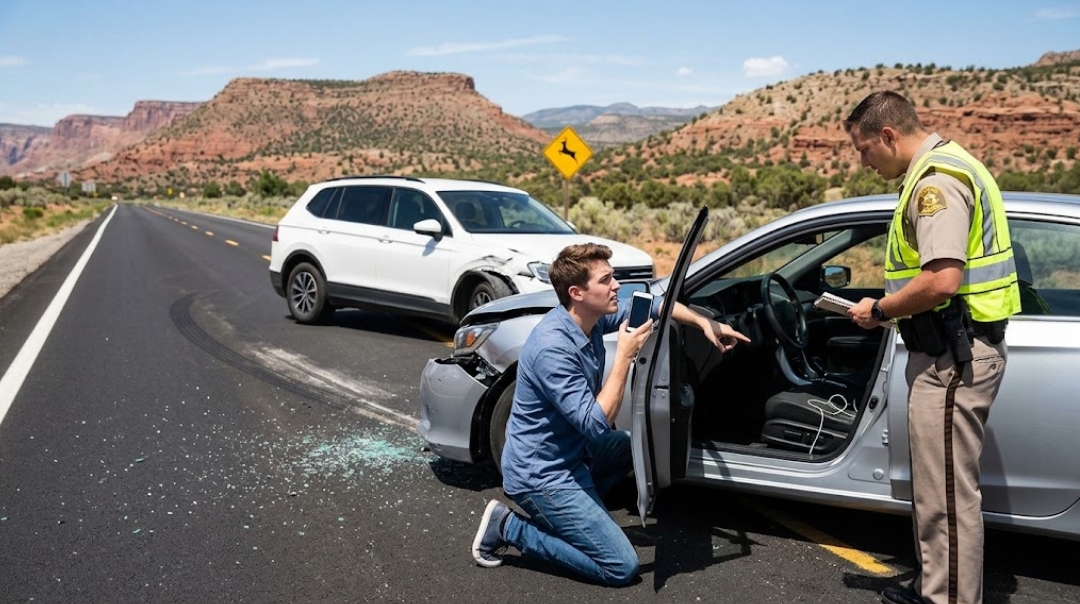
Every year, Utah roads witness thousands of car accidents because of distracted driving. When a driver’s attention is on a mobile device, texting, eating, or talking, it endangers everyone around. To prove the other driver was not paying attention, you need valid evidence.
To make your case strong, evidence like mobile records, witness statements, police reports, and video footage can show the distraction.
In this article, we’ll explain what evidence you need to prove distracted driving, what to do if injured, and how a distracted driving accident lawyer can help. Let’s dive in.
What Counts as Distracted Driving in Utah?
Distracted driving is when a driver is not paying attention to the road and is doing other stuff that puts them and others in danger. Distractions can be of three types:
- Visual: It takes the driver’s eyes off traffic.
- Manual: It takes a hand away from the wheel.
- Cognitive: It takes the driver’s mind away from driving.
Texting while driving is a kind of distraction that can involve all three types at once. Other examples include eating, adjusting controls, reaching for items, or using a phone. The type of distraction matters less than the evidence showing what happened before the crash.
What Evidence Can Prove Distracted Driving?
Here are the 5 types of evidence that can help establish what the driver was doing before a car crash:
1. Phone Records
Phone records provide one of the most direct proofs that the driver was not performing his duty on a merit basis. It shows that the driver was making calls, sending text messages, or doing other device activity. To demonstrate negligence, timing matters, i.e., when the driver made a call or sent a message and when the car collision happened.
2. Police Reports and Citations
A police report may contain useful information about the crash. It can include driver statements, witness accounts, officer observations, and citations. A citation or traffic ticket can support a distracted driving claim, but it does not settle every issue in a personal injury case. These documented things carry massive weight when it comes to insurer negotiations and litigation.
3. Witness Statements
Witnesses may have seen the driver before the crash and can provide exact information. Passengers can also provide useful information about what happened before impact. They may have noticed that the at-fault driver was:
- Looking down
- Using phone
- Failed to react
- Looking away from traffic
- Reaching for something
- Using another device
4. Video and Camera Evidence
Video can show driver behavior in the seconds before a collision. Video should be requested quickly. Some camera systems automatically delete older recordings. Potential sources include:
- Dashcams
- Traffic cameras
- Business security cameras
- Parking lot cameras
- Doorbell cameras
- Nearby vehicle cameras
5. Vehicle and Crash Data
Some vehicles contain an event data recorder. It may record information related to a crash. Depending on the vehicle, data can include speed, braking, and other vehicle information. Crash reconstruction experts can compare this data with physical evidence. They may also review vehicle positions, damage, and roadway conditions.
Can You Prove Distracted Driving Without Phone Records?
Yes. Distracted driving proof is not limited to phone records only. No doubt, phone records are useful, but not required in every case. Other evidence that can prove distracted driving may include:
- Witness testimony
- Police observations
- Driver statements
- Dashcam footage
- Traffic camera footage
- Security video
- Vehicle data
- Physical evidence
The goal is to build a factual timeline. That timeline should show what the driver did before the crash.
What Makes Distracted Driving Difficult to Prove?
There are several issues that can make it hard to prove distracted driving. These may include:
- A driver may deny using a phone.
- A police report may not identify distraction.
- Witnesses may remember events differently.
- Phone activity does not show exactly how the device was used.
- A camera did not capture the driver’s hands or face clearly.
- Lack of skid marks or sudden braking.
Steps to Take After a Distracted Driving Accident in Utah
Take steps that help preserve evidence while the facts are still fresh. After the crash, follow these steps:
Step 1: Get medical care and keep treatment records.
Step 2: Call law enforcement and report the incident when appropriate.
Step 3: Photograph the vehicle damage and roadway conditions.
Step 4: Identify witnesses and document their names and contact information.
Step 5: Save photos and videos from nearby cameras on your mobile.
Step 6: Write down what you saw before impact.
Step 7: Give accurate and factual statements to insurers without guessing.
Step 8: Discuss the claim with an experienced Utah distracted driving accident lawyer.
How Can a Utah Distracted Driving Accident Lawyer Help?
After a car accident in Utah, a victim can’t collect all evidence. Most victims’ core concern is what to do first and how to prove the other driver was at fault. At that critical moment, it’s the best decision to call a Utah distracted driving accident lawyer.
At The Law Offices of Roberto Hernandez, we help Utah accident victims review evidence after a suspected distracted driving crash. From medical records to witness information, we check all records, reconstruct the accident scene, and fight for your rights. You’ll get compensation for your injuries and losses you deserve under Utah law.
FAQs
How do you prove someone was texting while driving?
Phone records can show text activity near the crash time. Witnesses and video can provide additional evidence. Driver statements may also help establish what happened.
What Does Utah Law Say About Distracted Driving?
Utah Code §41 6a 1716 restricts certain manual uses of wireless communication devices while driving. It covers texting, calls, internet use, and viewing content, with exceptions for navigation, emergencies, and hands-free use.
Can you prove distracted driving without phone records?
Yes. Witnesses, police reports, video, vehicle data, and physical evidence can support the claim. Phone records are only one possible evidence source.
Can a driver deny being distracted?
Yes. A driver can dispute the allegation. Other evidence may still support the claim. Phone records, witnesses, video, and crash data may provide evidence that conflicts with the driver’s statement.
Can phone records be obtained after a Utah car accident?
Sometimes. Another person’s phone records are not automatically available. A subpoena or other legal process may be required.
Does distracted driving prove negligence in Utah?
Not by itself. Distracted driving can support the breach element of negligence. The claim must also connect the conduct to the crash and resulting damages.
Conclusion
Distracted driving cases depend on evidence. Phone records, witnesses, police reports, video, and crash data can all help. The evidence should show what happened before the crash. It should also connect the driver’s conduct to your injuries and losses. If you were injured in a Utah crash, The Law Offices of Roberto Hernandez can review the facts and explain your options.
