


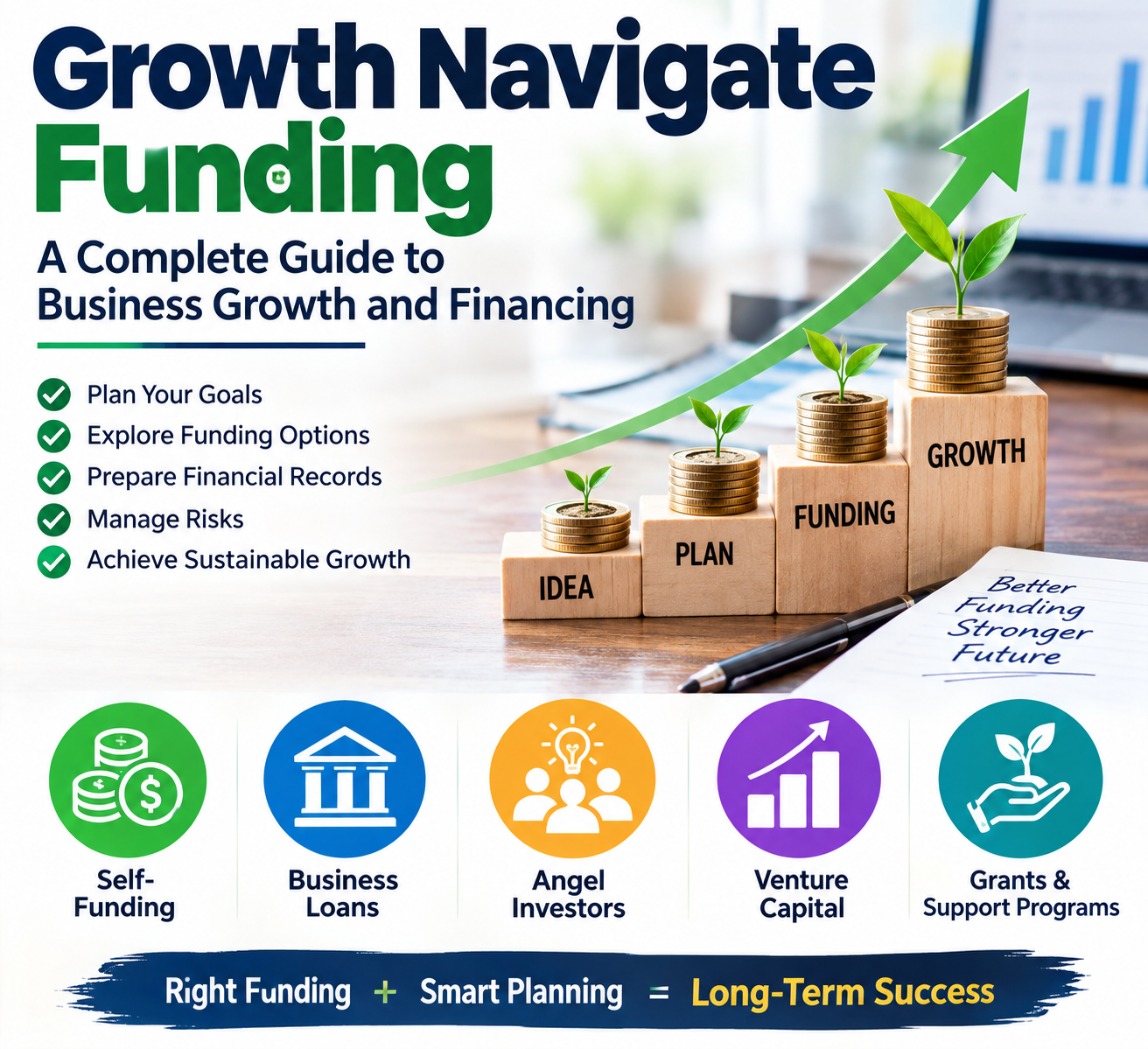
Growth Navigate Funding: A Complete Guide to Business Growth and Financing
Every growing business needs a clear plan, reliable financial resources, and a strategy for long-term success. Whether an entrepreneur is launching a startup or expanding an established company, choosing the right funding option can make a significant difference. Growth Navigate Funding is a useful term for understanding how businesses can plan, secure, and manage capital to support sustainable growth.
Instead of searching for money without a specific purpose, business owners should identify their goals, calculate their financial requirements, and select funding options that match their needs. This approach helps them make informed decisions while managing financial risks.
In this guide, we explain the meaning of Growth Navigate Funding, explore common funding options, and discuss practical ways to prepare for business expansion.
What Is Growth Navigate Funding?
Growth Navigate Funding generally describes the process of matching business financing with growth objectives. It focuses on identifying how much capital a company needs, where that capital can come from, and how it should be used to achieve measurable results.
The phrase can also be associated with private business advisory services that offer fundraising guidance. It should not automatically be interpreted as a government grant or guaranteed funding program. Anyone considering a particular provider should verify its identity, services, fees, and terms before making a financial commitment.
A well-planned funding strategy begins with a clear business objective. For example, a company might need money to develop a new product, hire employees, purchase equipment, improve marketing, or enter a new market. Each goal requires a different financial approach.
Why Growth Navigate Funding Matters for Businesses
Funding can help businesses turn opportunities into practical results. However, receiving money alone does not guarantee success. Companies need to use their resources carefully and understand the financial commitments attached to them.
A structured Growth Navigate Funding approach can help businesses:
- Plan expansion around realistic financial goals.
- Identify suitable funding sources.
- Prepare financial records and business projections.
- Manage cash flow and operating expenses.
- Understand borrowing costs and investor ownership requirements.
- Measure whether funded projects deliver the expected results.
These steps can reduce avoidable mistakes and help business owners make decisions based on evidence rather than assumptions.
Common Funding Options for Business Growth
1. Self-Funding
Self-funding means using personal savings or money generated by the business. It allows founders to maintain greater control and avoid giving away ownership. However, using personal resources can expose the founder to financial losses if the business struggles.
2. Business Loans
Loans provide capital that businesses generally repay according to agreed terms, including applicable interest and fees. They may be useful for purchasing equipment, increasing inventory, or managing working capital. Before borrowing, owners should assess repayment capacity and compare the total cost of financing.
3. Angel Investors
Angel investors are individuals who invest their own money in businesses with growth potential. Depending on the agreement, they may provide industry knowledge, mentoring, and professional connections in exchange for equity or another investment arrangement.
4. Venture Capital
Venture capital can help promising startups finance rapid expansion, product development, or entry into larger markets. This funding usually involves exchanging an ownership stake for investment. It may suit companies with substantial growth potential, but founders should carefully consider dilution and investor expectations.
5. Grants and Business Support Programs
Some organizations and government bodies offer grants for eligible businesses, research projects, innovation, or economic development. Availability depends on the location, industry, and program requirements. Applicants should check official sources and never assume that a business qualifies without reviewing the eligibility criteria.
How to Prepare for Growth Navigate Funding
Successful fundraising usually requires preparation. Business owners can improve their readiness by following these steps.
Define the objective: Explain exactly what the funding will accomplish, such as increasing production, hiring staff, or launching a service.
Calculate the required amount: Prepare a realistic budget covering immediate costs, future expenses, and an appropriate cash reserve.
Organize financial records: Maintain accurate income statements, cash-flow information, expense records, and financial projections.
Develop a business plan: Explain the target market, customer needs, competitive advantages, revenue model, and growth strategy.
Compare funding options: Consider repayment obligations, interest, fees, ownership dilution, eligibility, and the time required to secure financing.
Track results: Establish measurable milestones and review spending regularly to determine whether the funding is producing meaningful progress.
Common Funding Mistakes to Avoid
One common mistake is raising more money than the business can use effectively. Excessive funding can introduce unnecessary costs, repayment obligations, or pressure from investors.
Another mistake is underestimating operating expenses. Businesses should account for salaries, marketing, inventory, technology, taxes, and other recurring costs before committing to an expansion plan.
Entrepreneurs should also avoid relying on unrealistic revenue projections. Financial forecasts should use reasonable assumptions and account for possible delays or lower-than-expected sales.
Finally, be cautious of providers promising guaranteed funding or demanding upfront payments in exchange for certain approval. Verify the organization independently, review the complete contract, and understand exactly what services are being offered before paying.
Building a Sustainable Funding Strategy
A sustainable funding strategy connects financial decisions with the long-term direction of a business. Companies should review their funding requirements as revenue, expenses, customer demand, and market conditions change.
For example, an early-stage startup might begin with founder savings and gradually seek outside investment after demonstrating customer demand. A more established business with predictable revenue might consider a suitable loan to finance equipment or expansion.
The right choice depends on the business model, financial position, risk tolerance, and growth objectives. Regular financial reviews can help business owners identify problems early and adjust their plans when necessary.
Conclusion
Growth Navigate Funding provides a practical way to think about business financing, strategic planning, and sustainable expansion. By defining clear objectives, evaluating available funding sources, preparing accurate financial information, and monitoring results, entrepreneurs can make more informed decisions about their next stage of growth.
The most suitable funding option is not always the one offering the largest amount of money. It is the one whose costs, conditions, timing, and risks fit the business’s actual needs. Careful preparation and independent verification can help business owners pursue growth with greater confidence.
Frequently Asked Questions (FAQs)
1. What is Growth Navigate Funding?
Growth Navigate Funding generally refers to planning and securing financial resources that support business growth. The phrase may also refer to private advisory services, so the specific provider should be verified.
2. Is Growth Navigate Funding a government grant?
The phrase itself should not be assumed to represent an official government grant. Verify any claimed program directly with the relevant government agency or funding organization.
3. Who can benefit from Growth Navigate Funding?
Startups, small businesses, and established companies may benefit from structured funding planning when they need capital for hiring, product development, equipment, marketing, or expansion.
4. What documents are needed when seeking business funding?
Requirements vary, but lenders and investors may request a business plan, financial statements, cash-flow projections, ownership details, identification, and information about the intended use of funds.
5. How do I choose the right funding option?
Compare your funding needs, repayment ability, business stage, total financing costs, ownership implications, and eligibility requirements before making a decision.
6. Is business funding guaranteed?
No. Approval depends on the funding provider, eligibility requirements, financial circumstances, business performance, and other relevant factors.
7. How can I avoid funding scams?
Research the provider independently, verify its legal identity, read the contract carefully, and be wary of guaranteed approvals, pressure tactics, or unexplained upfront fees.
Contact Us
Do you have questions, suggestions, or additional insights about Growth Navigate Funding and business growth strategies? We welcome feedback from entrepreneurs, business owners, and readers who want to learn more about responsible funding and financial planning.
Please visit our website’s Contact Us page to share your questions, suggest relevant topics, or provide feedback. Our goal is to publish clear, useful information that helps readers better understand business financing and growth opportunities.
