

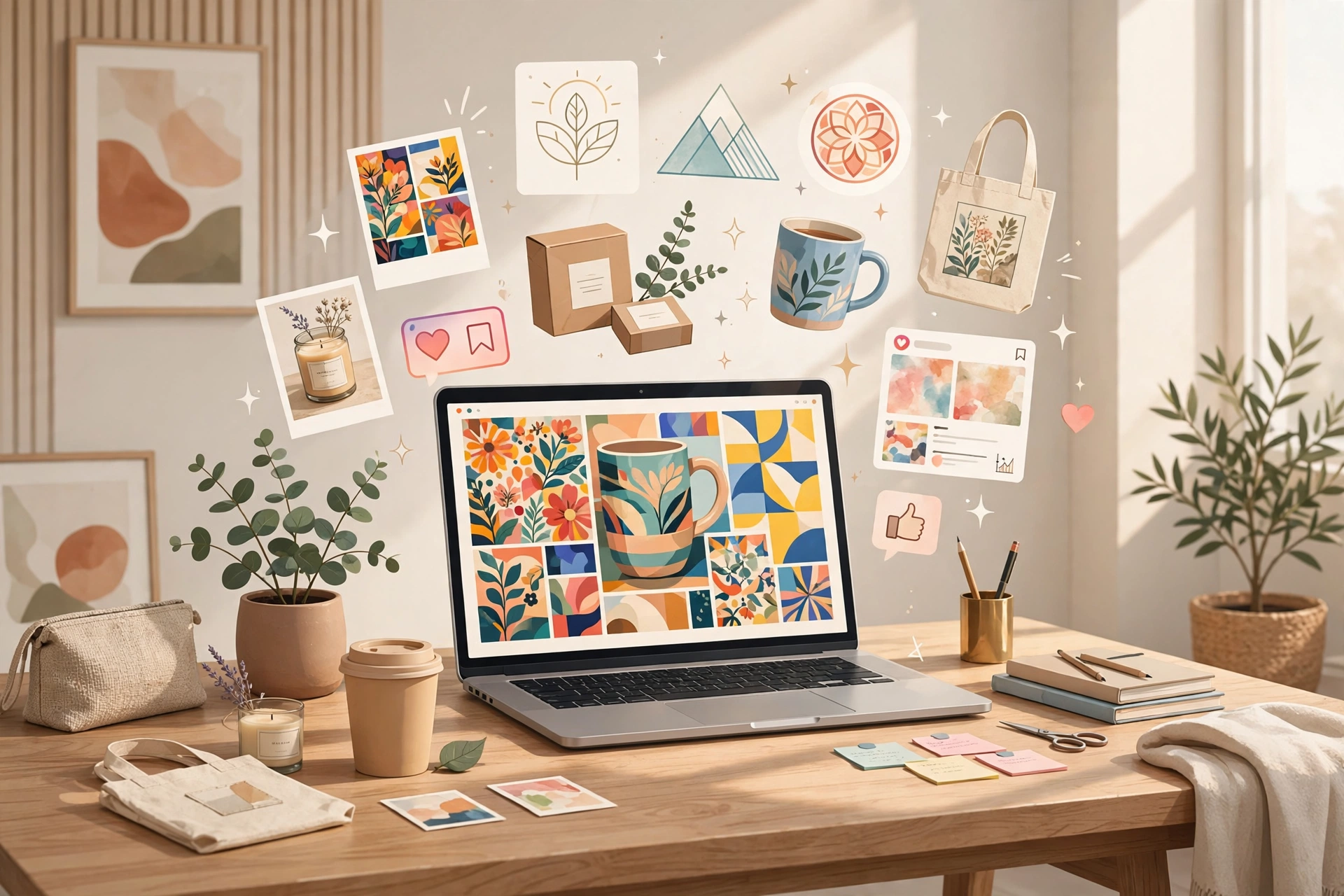
A small business needs images constantly: a logo variation, a product photo, a social media post, an ad banner, a blog header. Hiring a designer for every single one is expensive, and stock photos often look generic — the same images your competitors are already using. AI image generators change that equation. Type a description, and in seconds you have a unique image made for your brand.
Why Small Businesses Are Switching to AI Images
Stock photos and designer fees add up fast. A single custom product shot from a photographer can cost more than a month of an AI image tool. AI generators also give you something stock libraries cannot: images that match your exact idea — your product in a specific setting, your brand colours, your style.
That said, AI images are a starting point, not a finished product. The best results come from generating a good base image and then adjusting it — cropping, adding your logo, fixing small details. Used that way, they are one of the highest-return tools a small business can adopt, alongside the writing and video tools in our roundup of the best AI writing tools for small business.
1. ChatGPT (DALL-E)
ChatGPT’s image generation, powered by DALL-E, is the easiest starting point for most small businesses because many already have a ChatGPT account. You describe the image in plain language — “a cosy coffee shop logo, warm colours, minimalist style” — and it generates it in seconds. It handles text inside images better than most competitors, which matters for logos, signs, and social graphics with words on them.
The image quality is strong and consistent, and you can ask for variations or edits in the same conversation. The downside is that it is less specialised than dedicated design tools — you cannot fine-tune brand fonts or build reusable templates. But as an all-round image generator for a small business, it is hard to beat. It pairs naturally with the marketing workflow in our guide to ChatGPT for small business marketing.
2. Midjourney
Midjourney produces the most beautiful, artistic images of any tool on this list. If you want a striking hero image for your website, a dramatic product shot, or eye-catching social media art, nothing else matches its style and detail.
The catch is usability. Midjourney runs through Discord, which feels unfamiliar to many business owners, and it has a learning curve — good results depend on learning how to write effective prompts. It also has no free plan. Choose Midjourney when visual quality is your top priority and you are willing to invest a little time learning it.
3. Adobe Firefly
Adobe Firefly is the safest choice for a business that worries about copyright. It is trained only on licensed Adobe Stock images and public domain content, so the images it generates are commercially safe to use — a real advantage if you publish a lot of marketing material. Firefly is also built into Photoshop and Adobe Express, so you can generate an image and edit it in the same workflow.
Its image quality is very good, especially for realistic photos and clean product shots, though it is less artistic than Midjourney. The free plan is generous, and paid plans are reasonably priced. Firefly is the best pick for businesses that want legal peace of mind and already use Adobe tools.
4. Canva AI (Magic Media)
Canva AI, called Magic Media, is the best choice if you are not a designer at all. It lives inside Canva, so you generate an image and immediately place it into a social post, flyer, presentation, or ad — with your brand colours, fonts, and logo already applied. There is no switching between tools and no design skill required.
The image quality is good rather than exceptional, and the generation options are simpler than dedicated tools. But for a small business owner who needs a finished social post in five minutes, that simplicity is the point.
5. Ideogram
Ideogram’s standout strength is text. Most AI image generators mangle words inside images — misspelled signs, garbled logos, nonsense lettering. Ideogram renders text accurately, which makes it the best tool on this list for logos, posters, t-shirt designs, and any image where the words matter as much as the picture.
6. Leonardo AI
Leonardo AI is the most versatile tool here for businesses that want control. It offers fine-tuned models for different styles — photorealistic, illustration, product shots, 3D renders — plus tools for upscaling images, removing backgrounds, and training a model on your own product photos so every generated image matches your brand.
That power comes with more complexity than Canva or ChatGPT, but the free plan is generous enough to learn on, and the paid plans scale reasonably. Leonardo is the best choice for e-commerce sellers and product-based businesses that need consistent, on-brand product imagery at volume. Pair it with the tools in our roundup of the best AI video generator tools to cover both your images and your video content.
7. Microsoft Designer (Image Creator)
Microsoft Designer, with its Image Creator, is the best free option on this list. If you have a Microsoft account, you can generate images at no cost, with a daily allowance that covers most small business needs. It is simple to use, produces clean, bright images, and integrates with the rest of Microsoft’s tools.
The quality is solid for social posts, blog headers, and simple graphics, though it lacks the advanced controls of Leonardo or the artistic flair of Midjourney. For a business on a tight budget — or one that just wants to try AI images before paying for anything — Microsoft Designer is the obvious place to start.
How to Choose the Right AI Image Generator
Start with your main use case. If you need images with text, logos, or posters, Ideogram is the answer. If you want the most beautiful images and can learn a new tool, choose Midjourney. If legal safety matters most, pick Adobe Firefly. If you want the fastest route to a finished social post, use Canva AI. If product photos at volume are the priority, Leonardo AI gives you the most control. And if budget is the deciding factor, Microsoft Designer costs nothing to start.
Most small businesses end up using two tools: one for everyday speed, like Canva AI or ChatGPT, and one for higher-quality work, like Midjourney or Firefly. That combination covers nearly every image a small business needs.
One rule applies to every tool on this list: always check the licensing terms for your plan before using an image in paid advertising, and always review generated images carefully. AI can produce odd details — extra fingers, warped text, strange objects in the background. A quick human check before publishing protects your brand.
Final Thoughts
The best AI image generator for small business depends on what you make most. For most small businesses, ChatGPT or Canva AI covers everyday needs at a low cost, while Firefly adds legal safety and Midjourney adds wow factor when it matters. Pick one, try it on your next five social posts, and build it into your weekly routine.
