


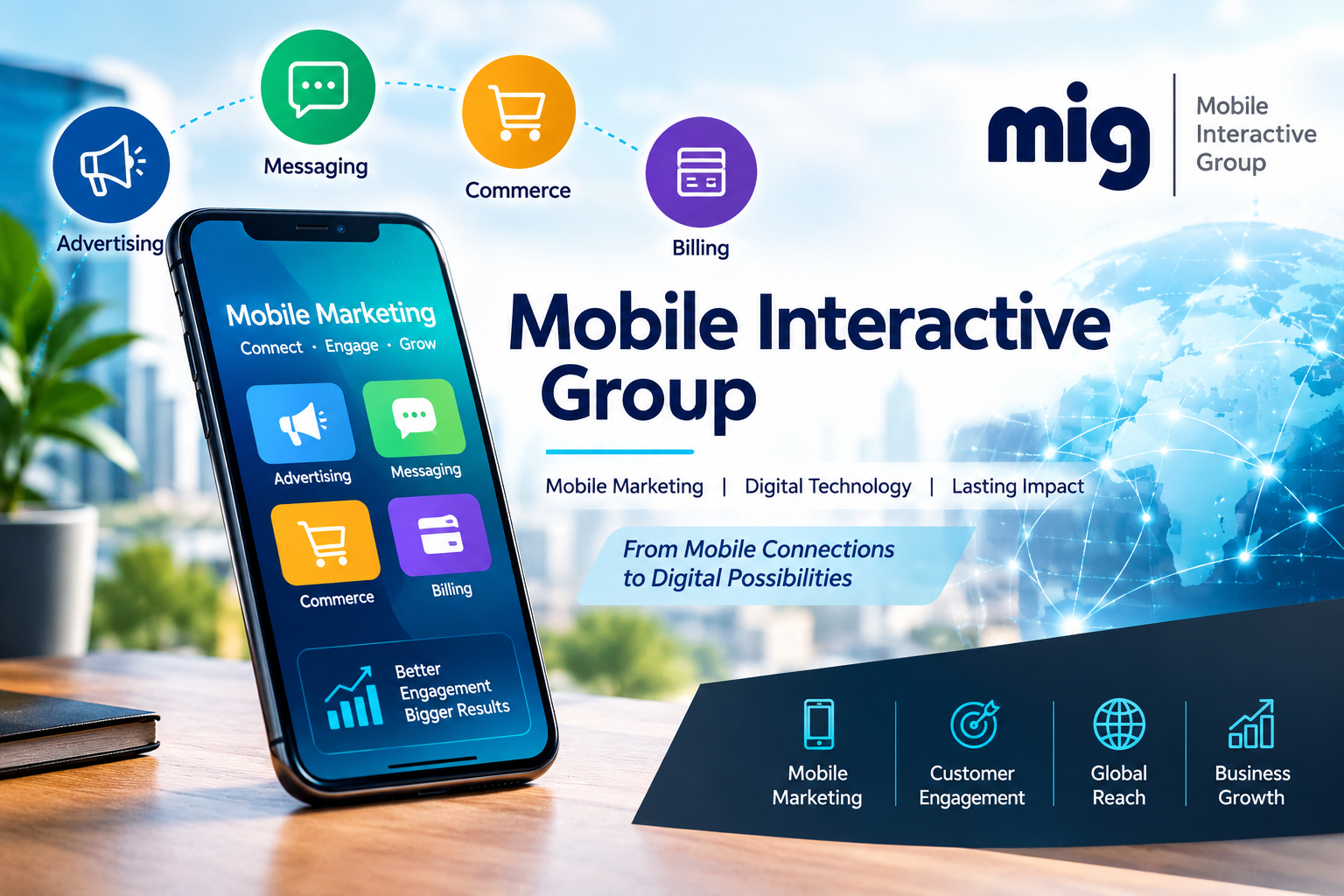
Mobile Interactive Group: History, Services, and Digital Marketing Legacy
Mobile technology has transformed how businesses communicate with customers, promote products, and deliver digital services. Before mobile applications and smartphone marketing became as widespread as they are today, specialized technology companies were already exploring ways to make mobile communication more interactive. One notable name from this period was Mobile Interactive Group (MIG), a UK-based business associated with mobile marketing, mobile commerce, advertising, and digital communications.
Understanding Mobile Interactive Group provides useful insight into the development of mobile marketing and the evolution of digital customer engagement. Its history also demonstrates how technology companies can expand their services, build international partnerships, and respond to changing market demands.
What Was Mobile Interactive Group?
Mobile Interactive Group was a British mobile marketing and digital technology company founded in 2004, according to its acquisition announcement. It developed services that helped brands, media organizations, and mobile operators connect with audiences through mobile devices.
The company operated in several areas of digital communication rather than focusing on a single service. Its activities included mobile advertising, messaging, mobile billing, mobile commerce, and interactive experiences that connected mobile users with digital and broadcast content.
In November 2011, mobile marketing company Velti announced that it had acquired MIG. The announcement described MIG as a significant player in the UK mobile marketing industry and highlighted its international reach and technology capabilities. Source: Velti’s acquisition announcement.
Main Services Offered by Mobile Interactive Group
1. Mobile Marketing
Mobile marketing allows businesses to communicate with customers through mobile devices. MIG offered marketing services that helped organizations reach audiences using mobile communication channels.
Depending on the campaign, mobile marketing can include promotional messages, mobile advertising, customer notifications, and links to digital offers. These approaches help businesses communicate with customers beyond traditional desktop-based channels.
2. Mobile Messaging
Messaging was another important part of the company’s service portfolio. Businesses can use mobile messaging to share updates, communicate offers, deliver notifications, and provide useful information.
When messaging is relevant and permission-based, it can help brands maintain customer relationships. Effective campaigns also need to respect privacy requirements and provide suitable options for managing communications.
3. Mobile Commerce
Mobile commerce, often called m-commerce, involves purchasing products or services through mobile devices. It includes mobile shopping, digital transactions, and other commercial activities completed through phones or tablets.
MIG’s work in mobile commerce reflected the growing importance of mobile devices in digital business. Today, businesses continue to improve mobile shopping experiences through simpler checkout processes, secure payments, and mobile-friendly websites.
4. Mobile Billing
Mobile billing enables certain purchases or services to be charged through mobile-related billing arrangements. It can be useful in specific digital service environments, although availability and payment methods depend on the provider, market, and applicable regulations.
MIG’s historical service portfolio included mobile billing, demonstrating how mobile technology extended beyond communication into commercial transactions.
5. Interactive Media and Advertising
MIG also developed technology that connected mobile interactions with broadcast and social media experiences. These services helped audiences participate in campaigns and engage with content through their mobile phones.
Interactive experiences can encourage people to respond, vote, share opinions, or participate in promotional activities. Such approaches helped establish ideas that remain relevant to modern digital engagement.
Mobile Interactive Group’s Growth and International Reach
MIG expanded its business through a combination of technology development, client relationships, and acquisitions. In February 2011, the company announced its acquisition of Golden Bytes International, a mobile technology and marketing business with operations in the Netherlands and Belgium.
The transaction was intended to strengthen MIG’s European presence and extend its services across additional markets. The announcement also referenced services such as mobile websites, applications, user experience design, loyalty solutions, and mobile advertising.
Later that year, Velti announced its acquisition of Mobile Interactive Group. According to the announcement, MIG served enterprise customers across multiple industries and had operations in several countries. These historical details illustrate the company’s scale during that period, rather than describing its present-day operating status.
Why Mobile Interactive Group Matters in Digital Marketing History
The history of Mobile Interactive Group illustrates several important developments in digital marketing.
Mobile-first communication: Businesses increasingly recognized that mobile devices could support advertising, customer service, transactions, and interactive content.
Integrated marketing channels: Mobile campaigns could connect with television, social media, websites, and other communication channels instead of operating independently.
Customer engagement: Interactive features encouraged audiences to participate rather than simply receive promotional messages.
International expansion: Companies could extend their technology and services into new markets by forming partnerships and acquiring complementary businesses.
These developments helped shape the wider mobile marketing industry. Although technologies and customer expectations have changed considerably, the underlying goals of relevance, accessibility, convenience, and engagement remain important.
What Happened to Mobile Interactive Group?
Mobile Interactive Group was acquired by Velti in November 2011. This is a significant event in the company’s history and helps explain why information about MIG often appears in older mobile marketing and technology publications.
The UK Companies House record for Mobile Interactive Group Limited, company number 04672067, lists the legal entity as dissolved. Historical company records should be distinguished from the current status of any related brand, technology, or successor business. The dissolution of a particular legal entity does not, by itself, establish the status of every product or service associated with its former operations.
Anyone researching Mobile Interactive Group for business, employment, or commercial purposes should verify the relevant company and its current legal status through official records rather than relying solely on historical articles.
Lessons Businesses Can Learn from Mobile Interactive Group
Businesses exploring mobile technology can take several lessons from MIG’s history.
First, customer communication works best when it reflects how people actually use technology. Mobile experiences should be easy to access, relevant, and straightforward.
Second, combining complementary services can create a more complete customer experience. Messaging, advertising, commerce, and analytics may work together when they support a clear business objective.
Third, expansion requires careful planning. Partnerships and acquisitions can create opportunities, but businesses must also consider operational costs, technology integration, customer needs, and market conditions.
Finally, companies need to adapt as technology evolves. Digital businesses must regularly evaluate their products, customer expectations, security practices, and competitive environment.
Conclusion
Mobile Interactive Group was an important participant in the development of mobile marketing and digital communications during the early growth of the mobile internet. Its services covered messaging, advertising, mobile billing, commerce, and interactive media, while its acquisition by Velti in 2011 marked a major milestone in its corporate history.
For readers studying digital marketing, MIG provides an example of how mobile technology developed into a broader business platform. Its story highlights the value of customer engagement, integrated communication, and innovation while also demonstrating why historical company information should be checked against official records.
Frequently Asked Questions (FAQs)
1. What was Mobile Interactive Group?
Mobile Interactive Group was a UK-based mobile marketing and digital technology business that offered services including mobile advertising, messaging, billing, commerce, and interactive media.
2. When was Mobile Interactive Group founded?
The company’s 2011 acquisition announcement described MIG as having been founded in 2004.
3. Who acquired Mobile Interactive Group?
Velti announced its acquisition of Mobile Interactive Group on November 15, 2011.
4. What services did Mobile Interactive Group provide?
Its historical services included mobile marketing, mobile messaging, mobile commerce, mobile billing, advertising, and interactive digital experiences.
5. Was Mobile Interactive Group an international company?
Yes. Its acquisition announcement described operations across several countries, including the UK, United States, Netherlands, Belgium, and Australia.
6. Is Mobile Interactive Group still operating under its original company identity?
The UK Companies House record for Mobile Interactive Group Limited, company number 04672067, lists that legal entity as dissolved. This should not be confused with the status of every related technology or business.
7. Why is Mobile Interactive Group relevant today?
Its history helps explain the development of mobile marketing, interactive advertising, mobile commerce, and integrated digital communication.
Contact Us
Do you have additional information, historical records, or questions about Mobile Interactive Group and the evolution of mobile marketing? We welcome reader feedback, corrections, and suggestions for future technology articles.
Please visit our website’s Contact Us page to share your comments or recommend related topics. We aim to provide clear, informative content that helps readers understand digital technology and its business history.
Disclaimer: This article is intended for general informational and educational purposes. Historical company details are based on publicly available records and announcements. Readers should consult official sources when verifying legal status or making business decisions.
