


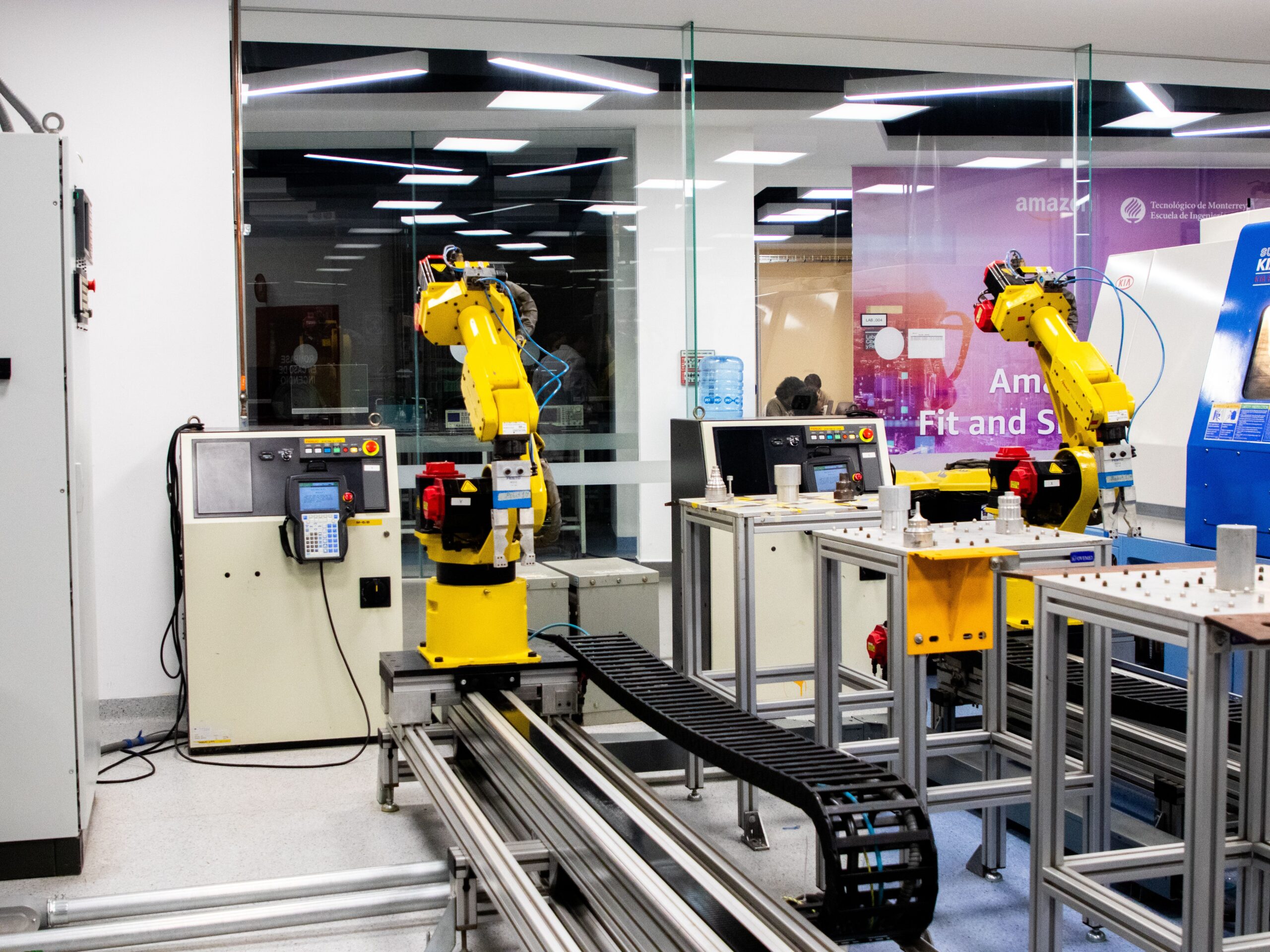
Learn robot programming with this complete beginner’s guide. Discover robotics coding, robot automation programming, FANUC robot programs, RobotStudio, robot protocols, and how to develop a robot from scratch.
Robot Programming: The Complete Beginner’s Guide to Programming and Controlling Robots
Robot programming is one of the most valuable skills in modern automation. Whether you’re interested in industrial manufacturing, warehouse automation, healthcare robotics, or educational robots, understanding robot programming opens the door to countless career opportunities.
Today, robots are performing tasks that once required human workers—from assembling vehicles to packaging products and even assisting surgeons. However, none of these robots can function intelligently without proper programming.
This guide explains everything beginners need to know about programming robots, including robotics coding, industrial robot software, FANUC robot programs, ABB RobotStudio, robot communication protocols, and the steps involved in developing your own robot.
What Is Robot Programming?
Robot programming is the process of writing instructions that tell a robot how to move, react, make decisions, and perform tasks automatically.
Unlike traditional software development, robot programming combines several disciplines, including:
- Computer programming
- Electronics
- Sensors
- Artificial Intelligence
- Motion control
- Mechanical engineering
Every robot follows programmed instructions to:
- Move safely
- Detect objects
- Pick and place items
- Navigate environments
- Communicate with other machines
- Complete repetitive tasks accurately
Without programming, a robot is simply hardware with no intelligence.
Why Robot Programming Matters
Automation is transforming nearly every industry.
Companies use robots because they can:
- Improve productivity
- Reduce production costs
- Increase workplace safety
- Deliver consistent quality
- Operate 24/7
- Reduce human error
This growing demand has created excellent opportunities for professionals skilled in robotics coding and industrial automation.
Industries hiring robot programmers include:
- Manufacturing
- Automotive
- Logistics
- Food processing
- Electronics
- Aerospace
- Healthcare
- Agriculture
Skills Required for Robot Programming
Successful robot programmers usually develop knowledge in several technical areas.
Programming Languages
Common languages include:
- Python
- C++
- Java
- C#
- ROS scripting
- RAPID (ABB)
- KAREL (FANUC)
Python is usually recommended for beginners because of its simple syntax and extensive robotics libraries.
Mathematics
Robot movement relies heavily on:
- Geometry
- Trigonometry
- Linear algebra
- Calculus
- Coordinate systems
These concepts help robots calculate accurate movement.
Electronics
Understanding electronics helps programmers work with:
- Motors
- Sensors
- Servo controllers
- PLC systems
- Cameras
- Encoders
Robotics Fundamentals
Learn concepts such as:
- Kinematics
- Dynamics
- Motion planning
- Path optimization
- Collision avoidance
- Machine vision
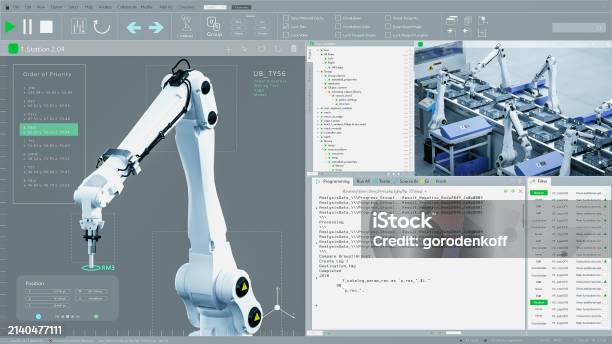
Programming Robot Systems: How Robots Receive Instructions
Programming robot systems generally follows the same workflow regardless of the manufacturer.
The basic process includes:
- Define the task
- Create movement paths
- Add logic
- Test movements
- Simulate operations
- Upload code
- Run safely
- Optimize performance
Industrial robots are designed to perform repetitive operations at high speed, so extensive testing is required to verify consistent and safe performance.
Popular Robot Programming Platforms
Several software platforms are widely used across industries.
RobotStudio
RobotStudio is ABB’s offline robot programming software.
Its main advantages include:
- Virtual robot simulation
- Digital twin technology
- Collision detection
- Path optimization
- Cycle time estimation
- Offline programming
Engineers can create complete production lines before installing physical robots.
Benefits include:
- Reduced downtime
- Faster deployment
- Lower project costs
- Improved accuracy
ROS (Robot Operating System)
ROS has become one of the world’s most popular robotics frameworks.
It supports:
- Navigation
- AI integration
- Vision systems
- Autonomous robots
- Sensor communication
ROS is widely used in research, universities, and robotics startups.
FANUC Programming Software
FANUC robots dominate industrial automation worldwide.
Programming is performed using:
- Teach Pendants
- KAREL programming
- TP Programs
- RoboGuide simulation
These tools allow engineers to create production-ready robot programs efficiently.
Understanding FANUC Robot Programs
Many manufacturing facilities rely on FANUC robot programs for automation.
These programs define:
- Robot positions
- Motion speed
- Tool operations
- Welding routines
- Pick-and-place operations
- Safety logic
A typical production line may contain hundreds of interconnected FANUC robot programs working together.
Program optimization helps reduce cycle time while maintaining safety.
Backing Up FANUC Robot Programs
One of the most overlooked maintenance tasks is backing up FANUC robot programs.
Backups protect valuable production data from:
- Hardware failures
- Software corruption
- Accidental deletion
- Controller replacement
- Emergency recovery
Best practices include:
- Schedule automatic backups
- Store copies on secure servers
- Keep offline backups
- Verify backup integrity regularly
- Document program versions
Regular backups can save manufacturers thousands of dollars in downtime.
Robot Protocol Explained
A robot protocol defines how robots communicate with other systems.
Communication may occur between:
- Robots
- PLC controllers
- Vision systems
- Factory software
- Sensors
- Industrial networks
Common robot communication protocols include:
- Ethernet/IP
- Modbus
- Profinet
- EtherCAT
- OPC UA
- MQTT
Reliable communication ensures smooth factory automation.
Robotics Coding for Beginners
Many beginners assume robotics coding is difficult.
In reality, learning becomes much easier when following a structured roadmap.
Start with:
Step 1
Learn Python basics.
Topics include:
- Variables
- Loops
- Functions
- Classes
- File handling
Step 2
Understand robot movement.
Study:
- Coordinates
- Rotation
- Joint movement
- Cartesian movement
Step 3
Practice simulations.
Simulation software allows experimentation without risking expensive hardware.
Step 4
Connect sensors.
Learn how robots receive information from:
- Cameras
- Distance sensors
- Touch sensors
- Temperature sensors
Step 5
Build projects.
Examples include:
- Line-following robots
- Object detection robots
- Robotic arms
- Mobile robots
- Warehouse robots
Project-based learning dramatically improves programming skills.
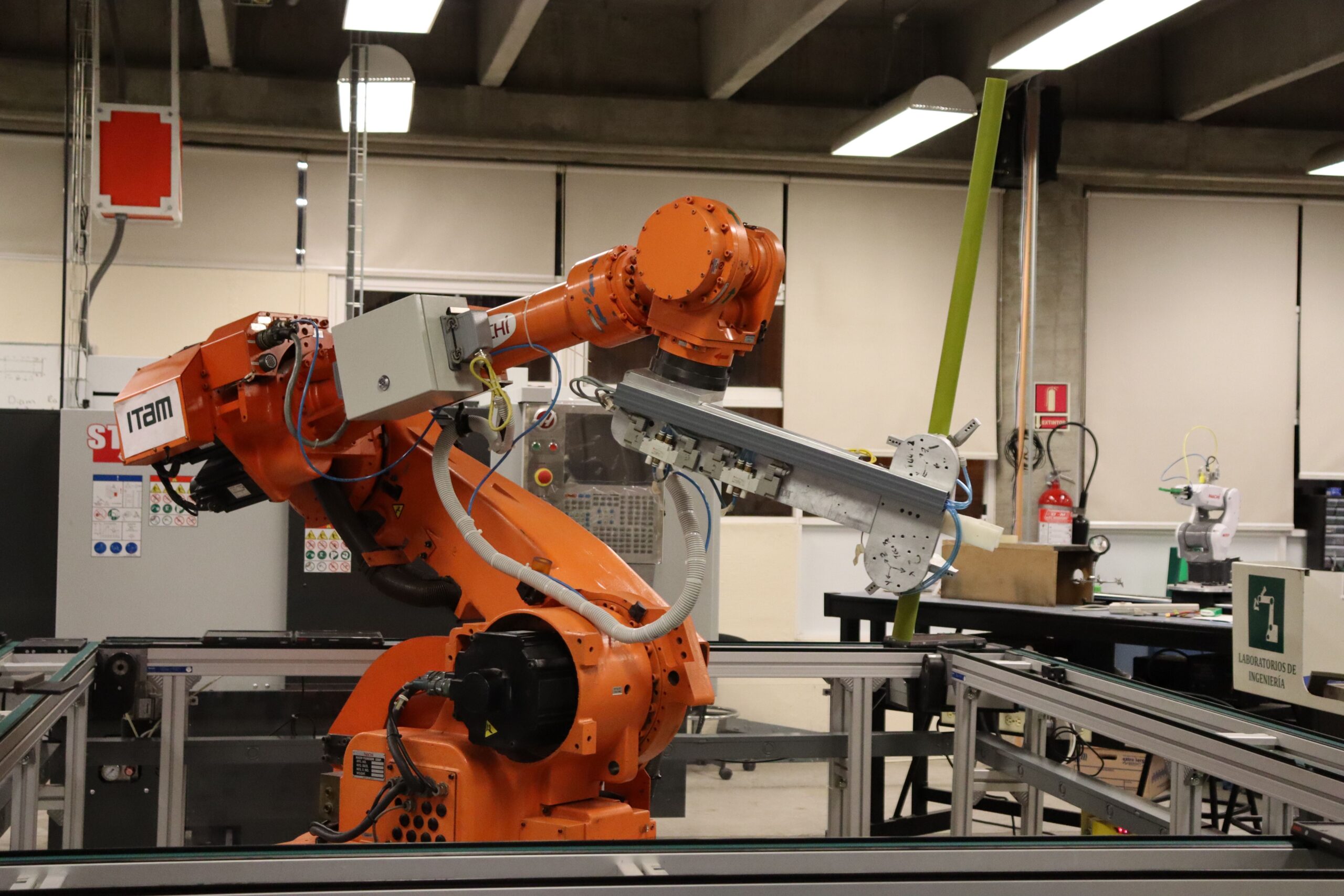
Robot Automation Programming in Industry
Modern factories depend heavily on robot automation programming.
Industrial robots perform tasks such as:
- Welding
- Painting
- Material handling
- Machine tending
- Packaging
- Inspection
- Assembly
- Palletizing
Automation programmers optimize:
- Cycle times
- Motion paths
- Energy consumption
- Safety systems
- Productivity
As factories adopt Industry 4.0 technologies, robot automation programming continues to grow in demand.
How to Develop a Robot
Many beginners ask how to develop a robot from scratch.
The process usually follows these stages.
Define the Goal
Determine the robot’s purpose.
Examples include:
- Cleaning
- Delivery
- Agriculture
- Manufacturing
- Education
Design the Hardware
Choose:
- Frame
- Motors
- Wheels
- Robotic arm
- Battery
- Sensors
Select the Controller
Popular controllers include:
- Raspberry Pi
- Arduino
- NVIDIA Jetson
- Industrial PLCs
Write the Software
Develop code that controls:
- Movement
- Sensors
- Navigation
- Decision-making
Test and Improve
Every robot requires repeated testing before deployment.
Developers continually improve:
- Speed
- Accuracy
- Battery life
- Reliability
How to Construct a Robot
Understanding how to construct a robot involves both mechanical assembly and software integration.
Typical construction includes:
- Building the chassis
- Installing motors
- Wiring electronics
- Connecting sensors
- Mounting controllers
- Uploading software
- Performing calibration
Even educational robots follow these same engineering principles on a smaller scale.
Common Challenges in Robot Programming
Every programmer encounters obstacles.
Some of the most common include:
Sensor Errors
Incorrect sensor readings can cause navigation failures.
Solution:
- Sensor calibration
- Filtering noisy data
- Better positioning
Collision Problems
Robots may collide with equipment.
Simulation software helps detect collisions before deployment.
Communication Issues
Poor network configuration can interrupt robot operation.
Using reliable industrial protocols minimizes downtime.
Software Bugs
Programming errors often produce unexpected movement.
Testing in simulation environments helps identify problems safely.
Career Opportunities in Robot Programming
Demand for robot programmers continues to grow worldwide.
Popular careers include:
- Robotics Programmer
- Automation Engineer
- Robotics Software Engineer
- Controls Engineer
- AI Robotics Developer
- Industrial Automation Specialist
- Robot Systems Integrator
- Robotics Research Engineer
Professionals with experience in industrial automation often earn competitive salaries because of increasing demand.
Future Trends in Robot Programming
Robot programming is evolving rapidly.
Emerging trends include:
- Artificial Intelligence integration
- Machine Learning robots
- Cloud robotics
- Digital twins
- Autonomous mobile robots
- Collaborative robots (Cobots)
- Low-code robot programming
- Natural language robot control
Future robots will become easier to program while handling increasingly complex tasks.
Frequently Asked Questions
Is robot programming difficult?
Not necessarily. Beginners who start with Python and basic robotics concepts can gradually learn more advanced programming techniques.
Which language is best for robot programming?
Python is ideal for beginners, while C++, RAPID, and KAREL are widely used in industrial robotics.
Can I learn robot programming without owning a robot?
Yes. Simulation software such as RobotStudio and ROS-based simulators allows you to practice without physical hardware.
What is RobotStudio used for?
RobotStudio enables offline programming, robot simulation, collision detection, and production line optimization for ABB robots.
Why are FANUC robot program backups important?
Regular backups protect production programs from hardware failures, accidental deletion, and system recovery situations.
What industries need robot programmers?
Manufacturing, logistics, healthcare, agriculture, aerospace, automotive, electronics, and warehouse automation all rely heavily on skilled robot programmers.
Conclusion
Robot programming is becoming one of the most important technical skills in the age of automation. From educational robots to advanced industrial systems, programming gives machines the intelligence needed to perform complex tasks safely and efficiently.
Whether your goal is learning robotics coding, creating industrial automation systems, mastering FANUC robot programs, using RobotStudio, or discovering how to develop a robot, building a strong foundation today will prepare you for tomorrow’s rapidly expanding robotics industry.
As automation continues to reshape manufacturing, logistics, healthcare, and countless other sectors, professionals with robot programming expertise will remain in high demand. By practicing consistently, working on real-world projects, and learning modern robotics platforms, you can build valuable skills and stay ahead in one of the fastest-growing technology careers.
